
Lapidus Fusion
1st Metatarsal-Cuneiform Joint Fusion

Procedure
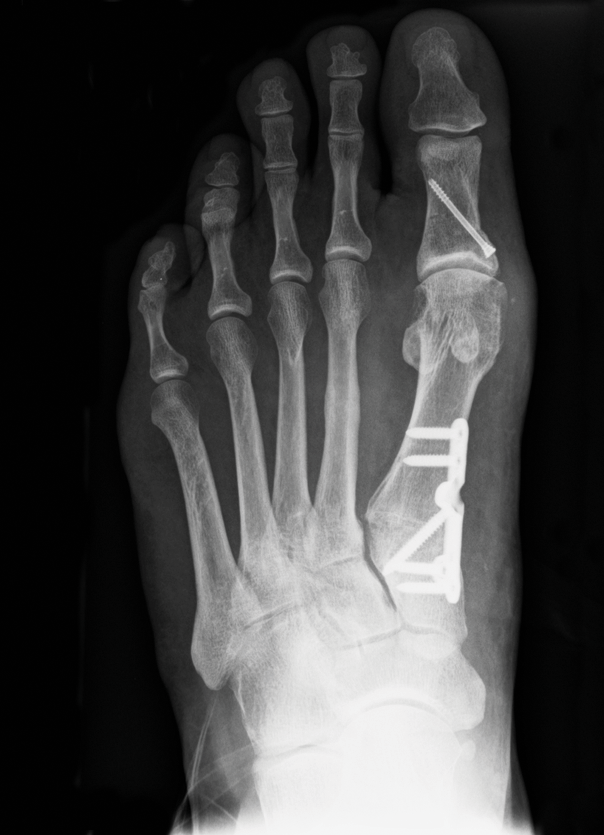
1st Metatarso-cuneiform Joint Fusion (Lapidus procedure)
Aims of surgery
To reduce pain and deformity in larger or unstable bunions. To straighten the big toe. To improve foot function.
Advantages of this operation
It helps to stabilise the foot and allows correction of larger deformities. It addresses arthritic and painful 1st Metatarsal/ cuneiform joints with bunion deformities.
Specific risks of this operation
Swelling of the foot - up to 6–9 months
Infection (2%)
Complications from bone graft harvest (this is performed in approximately 5% of Lapidus procedures) Pain from graft site, nerve injury, stress fracture and wound issues
Chronic regional pain syndrome (<1%)
Arthritis in other joints (5–10%).
Transfer of pressure to the ball of the foot
Non-union of bone (the bones does not knit together) — (2–5%) smokers are advised to stop smoking as the risk of this is higher in this patient group. Not all nonunions are painful or require further surgery.
Fixation problems (with the screws/plates/pins) (10–15%).which may require removal
Recurrence of pain or deformity
Nerve/tendon/blood vessel irritation/damage.
Deep Vein Thrombosis/Pulmonary Embolism (<1%).
Operation time
Usually about 60 minutes.
Incision placement/stitches
Usually on the side of the foot and with absorbable stitches (where possible).
Procedure
The bony surfaces either side of the first metatarsocuneiform joint (joint at the base of the first metatarsal) are removed to allow correction. The raw bone surfaces are then held together whilst they fuse (heal together). In addition an akin or closing wedge osteotomy/bone cut of the big toe may be required.
Fixation
Internal fixation (screws, plates) are usually used.
You will not normally notice these and they do not usually need to be removed (<20%).
Will I have plaster?
Most patients go straight into a fracture boot partially weight bearing with crutches usually for 4 weeks. Sometimes a plaster cast is used. After 4 weeks most people go to full weight bearing in the boot for a further two weeks
Is this a day procedure?
Yes.
Estimated time off work
Between 1–10 weeks depending upon the type of job and whether you can work from home.
Alternative treatments
Modifying your footwear, using painkillers and anti-inflammatories, joint injection therapy and using splints/pads/toe wedges or orthotic foot support (the use of splints/pads/orthoses does not correct the bunion or slow down the progression of the deformity.
More information
Speak with your consultant.
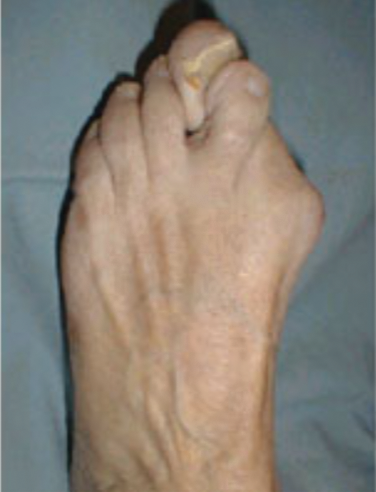
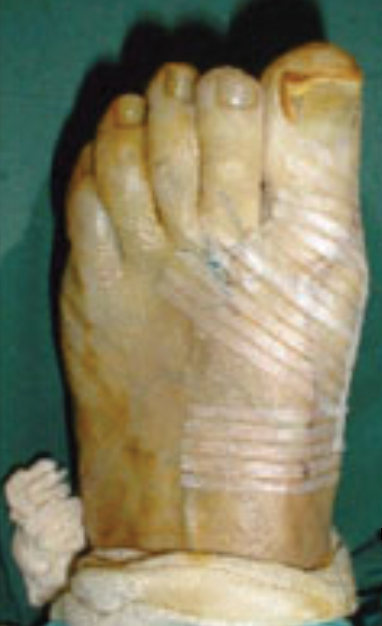
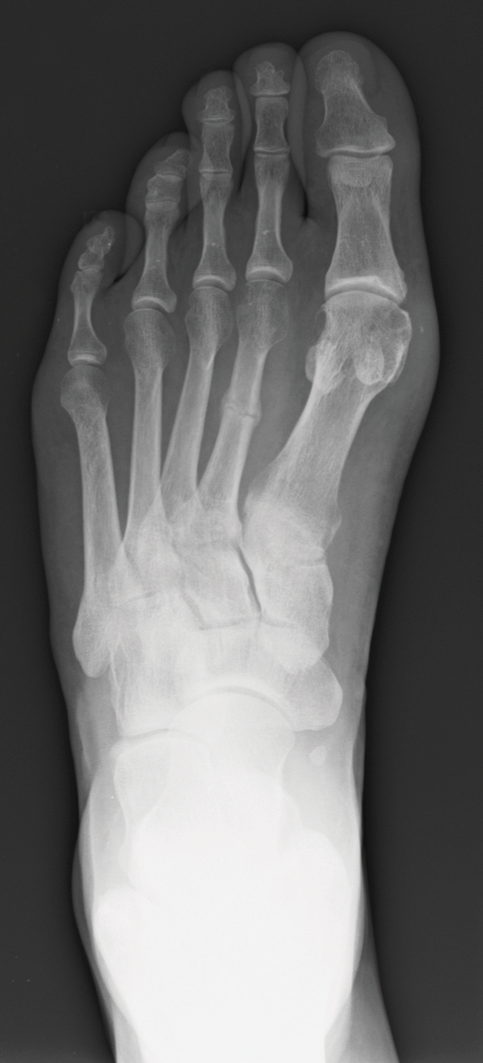
The surgery is usually undertaken with local anaesthetic in conjunction with sedation or general anaesthesia.
The operation takes about 90 minutes, although you will be in the day surgery unit for longer. You must have a competent adult at home for the rst day and night after surgery. This allows us to be sure you will be safe for the rst night. Your operated leg will be non weight-bearing in a cast for approximately 4–6 weeks. It is therefore very important that you have people to look after you and any dependants, such as children, elderly or disabled relatives, during this time.
Post-Operative Care
First 2 days after surgery
This is the time you are likely to have the most pain, but you will be given painkillers to help. You must rest completely for 2 days.
You need to keep the leg raised at the same level as your heart except when going to or from the toilet.
You should restrict your walking to going to the bathroom only. When getting about, use your crutches/zimmer/knee walker in the way you will have been shown.
Days 3–14 after surgery
You can get about a little more as instructed by your consultant.
When resting please keep your foot at hip level.
Between 7–14 days after surgery you will need to attend for your foot to be checked and redressed.
Between 2–6 weeks after surgery
Walking with your aids will increase more as instructed. Please continue to keep your leg elevated at hip level at rest.
You will have your foot x-rayed around 4–6 weeks.
Between 6–10 weeks after surgery
If all has gone well advice will be provided on weaning out of the cam-walker into wearing a good lace-up shoe/trainer.
The foot will still be swollen and twinges of discomfort are not uncommon at this time due to your increasing activity.
You will be instructed regarding rehabilitation exercises or you may be referred to a physiotherapist.
Between 10–16 weeks after surgery
The foot should continue to improve and begin to feel normal again.
There will be less swelling.
Sport can be considered depending on your recovery.
6 months after surgery
You will have the final review between 3–6 months following surgery.
The swelling should now be slight and you should be getting the full benefit of the surgery.
12 months after surgery
The foot has stopped improving with all healing complete.
Please note, if a complication arises, recovery may be delayed.